Baked BBQ tofu with creamy cauliflower mash
Crispy baked BBQ tofu with a homemade barbecue sauce and a creamy dairy-free cauliflower mash: pressing, when the sauce goes on, storage and reheating.
Makes About 4 cups of tofu and 4 cups of mash, 4 servings
Ingredients
For the tofu
- 28 oz (795 g) extra-firm tofu, two 14-oz blocks, drained
- 1 tbsp olive oil
- 1 tbsp soy sauce
- 2 tbsp cornstarch
For the barbecue sauce
- 1 1/4 cups (310 g) canned tomato puree, unsalted
- 3 tbsp apple cider vinegar
- 2 tbsp maple syrup
- 1 tbsp molasses
- 1 tbsp soy sauce
- 1 tsp yellow mustard
- 2 tsp smoked paprika
- 1 tsp garlic powder
- 1 tsp onion powder
- 1/4 tsp ground black pepper
For the cauliflower mash
- 1 large (about 840 g) head of cauliflower, cut into florets, thick core discarded
- 3 cloves (about 9 g) garlic, peeled
- 2 tbsp olive oil
- 1/4 cup (60 ml) unsweetened soy milk, or another unsweetened plant milk
- 3/4 tsp fine salt, plus more to taste
- 1/4 tsp ground black pepper
To serve
- 2 medium (about 30 g) scallions, thinly sliced (optional)
Equipment
- Tofu press, or a clean kitchen towel and a heavy pan
- Rimmed baking sheet and parchment paper
- Large bowl
- Small saucepan
- Large pot and colander
- Food processor or immersion blender
Method
Press the tofu: wrap each block in a clean kitchen towel, set a heavy pan or a few cans on top (or use a tofu press) and leave for 30 minutes, until the towel is damp and the blocks feel noticeably firmer.
Heat the oven to 425°F (220°C) with a rack in the middle, and line a rimmed baking sheet with parchment paper.
Cut the pressed tofu into 1-inch cubes. In a large bowl, toss the cubes gently with 1 tbsp olive oil and 1 tbsp soy sauce, then sprinkle over the cornstarch and toss again until every cube has a thin, even, slightly tacky coat with no dry powder left.
Spread the cubes on the baking sheet in a single layer with space between them. Bake for 25 minutes, turning them once halfway through, until they are golden on the outside, firm and slightly puffed.
While the tofu bakes, make the barbecue sauce: in a small saucepan, whisk the tomato puree with the apple cider vinegar, maple syrup, molasses, 1 tbsp soy sauce, yellow mustard, smoked paprika, garlic powder, onion powder and 1/4 tsp black pepper. Bring to a simmer over medium heat and cook, stirring often, for 10 to 12 minutes, until it has reduced slightly and is glossy and thick enough to coat the back of a spoon. Take it off the heat.
Start the mash at the same time: put the cauliflower florets and peeled garlic cloves in a large pot, cover with cold water by about an inch and bring to a boil. Lower the heat and simmer for 12 to 15 minutes, until a knife slides into the thickest stems with no resistance.
Drain the cauliflower and garlic well in a colander and let them stand for 5 minutes so the steam carries off excess water; this is what keeps the mash from turning watery.
When the tofu has had its 25 minutes, take the baking sheet out, pour about half of the barbecue sauce over the cubes and toss them with a spatula until coated. Spread them out again and bake for 8 to 10 minutes more, until the sauce is sticky and darkened at the edges. Check at 8 minutes: the sugars in the sauce go from caramelized to burnt quickly.
Meanwhile, put the drained cauliflower and garlic in a food processor (or back in the dry pot to use an immersion blender) with 2 tbsp olive oil, the salt and 1/4 tsp black pepper. Blend, adding the soy milk a tablespoon at a time, until the mash is smooth and creamy; you may not need all of it. Taste and add more salt if you like.
Spoon the mash onto plates, top with the barbecue tofu, and serve the remaining sauce on the side. Scatter with sliced scallions if you are using them.
Nutrition per serving
| Calories | 420 |
|---|---|
| Total fat | 22 g |
| Saturated fat | 3.5 g |
| Carbohydrate | 38 g |
| Fiber | 9 g |
| Total sugars | 20 g |
| Protein | 27 g |
| Sodium | 990 mg |
| Calcium | 680 mg |
| Iron | 7.3 mg |
Per serving, calculated from USDA FoodData Central values for the ingredients and amounts listed, leaving out the optional ingredients. Calories, fat, carbohydrate, fiber, sugars, protein and sodium are rounded with the FDA Nutrition Facts label rules; calcium is shown to the nearest 10 mg and iron to the nearest 0.1 mg. Brands differ, so treat the figures as estimates.
How these numbers were calculated
Each ingredient as weighed for the calculation and the USDA FoodData Central record its nutrients come from. Where USDA has no record for an ingredient (vegan butter, nutritional yeast, coconut sugar), the closest generic record is used and named here.
| Ingredient | Grams | USDA record |
|---|---|---|
| 28 oz (795 g) extra-firm tofu, two 14-oz blocks, drained | 793.8 g | FDC 174290: Tofu, extra firm, prepared with nigari (SR Legacy). Weight from: 1 oz = 28.35 g |
| 1 tbsp olive oil | 13.5 g | FDC 171413: Oil, olive, salad or cooking (SR Legacy). Weight from: USDA portion '1 tablespoon' |
| 1 tbsp soy sauce | 16 g | FDC 2707442: Soy sauce (FNDDS 2021-2023). Weight from: USDA portion '1 tablespoon' |
| 2 tbsp cornstarch | 16 g | FDC 169698: Cornstarch (SR Legacy). Weight from: USDA portion '1 cup' (1 cup = 16 tbsp = 48 tsp) |
| 1 1/4 cups (310 g) canned tomato puree, unsalted | 312.5 g | FDC 170460: Tomato products, canned, puree, without salt added (SR Legacy). Weight from: USDA portion '1 cup' |
| 3 tbsp apple cider vinegar | 44.7 g | FDC 173469: Vinegar, cider (SR Legacy). Weight from: USDA portion '1 tbsp' |
| 2 tbsp maple syrup | 40 g | FDC 169661: Syrups, maple (SR Legacy). Weight from: USDA portion '1 tbsp' |
| 1 tbsp molasses | 21.1 g | FDC 168820: Molasses (SR Legacy). Weight from: USDA portion '1 cup' (1 cup = 16 tbsp = 48 tsp) |
| 1 tbsp soy sauce | 16 g | FDC 2707442: Soy sauce (FNDDS 2021-2023). Weight from: USDA portion '1 tablespoon' |
| 1 tsp yellow mustard | 5 g | FDC 172234: Mustard, prepared, yellow (SR Legacy). Weight from: USDA portion '1 tsp or 1 packet' |
| 2 tsp smoked paprika | 4.6 g | FDC 171329: Spices, paprika (SR Legacy). Weight from: USDA portion '1 tsp' |
| 1 tsp garlic powder | 3.1 g | FDC 171325: Spices, garlic powder (SR Legacy). Weight from: USDA portion '1 tsp' |
| 1 tsp onion powder | 2.4 g | FDC 171327: Spices, onion powder (SR Legacy). Weight from: USDA portion '1 tsp' |
| 1/4 tsp ground black pepper | 0.6 g | FDC 170931: Spices, pepper, black (SR Legacy). Weight from: USDA portion '1 tsp, ground' |
| 1 large (about 840 g) head of cauliflower, cut into florets, thick core discarded | 840 g | FDC 169986: Cauliflower, raw (SR Legacy). Weight from: USDA portion '1 head large (6-7" dia.)' |
| 3 cloves (about 9 g) garlic, peeled | 9 g | FDC 169230: Garlic, raw (SR Legacy). Weight from: USDA portion '1 clove' |
| 2 tbsp olive oil | 27 g | FDC 171413: Oil, olive, salad or cooking (SR Legacy). Weight from: USDA portion '1 tablespoon' |
| 1/4 cup (60 ml) unsweetened soy milk, or another unsweetened plant milk | 60.8 g | FDC 175215: Soymilk (all flavors), unsweetened, with added calcium, vitamins A and D (SR Legacy). Weight from: USDA portion '1 cup' |
| 3/4 tsp fine salt, plus more to taste | 4.5 g | FDC 173468: Salt, table (SR Legacy). Weight from: USDA portion '1 tsp' |
| 1/4 tsp ground black pepper | 0.6 g | FDC 170931: Spices, pepper, black (SR Legacy). Weight from: USDA portion '1 tsp, ground' |
| 2 medium (about 30 g) scallions, thinly sliced (optional) | not counted (optional) | FDC 170005: Onions, spring or scallions (includes tops and bulb), raw (SR Legacy). Weight from: USDA portion '1 medium (4-1/8" long)' |
Baked BBQ tofu is cubes of pressed extra-firm tofu roasted until golden and chewy at the edges, then glazed with a smoky, tangy barbecue sauce and served on a bowl of creamy cauliflower mash. It works because of two decisions about timing. The tofu bakes bare first, so it can dry and crisp before anything sweet touches it, and the sauce goes on only at the end, when there is just enough time for it to turn sticky without burning. The mash, meanwhile, gets its body from well-drained cauliflower and olive oil rather than butter or cream.
Why the tofu is pressed and baked before it meets the sauce
Extra-firm tofu is packed in water and holds a lot of it. If that water stays in, the cubes steam in the oven instead of browning, and a sauce slides off a wet surface. Pressing for 30 minutes under a weight squeezes out enough to make the outside dry and firm. The full method, including what to do if you have no press, is in how to press tofu.
After pressing, the cubes get a light toss in oil and soy sauce and then a coating of cornstarch. The oil helps the surface brown, the soy sauce seasons the outside, and the cornstarch turns into a thin, dry crust in a hot oven. The aim is a coat so thin it disappears: if you can see white powder, toss again until it has been absorbed.
Space matters as much as the coating. Spread the cubes in a single layer with gaps between them. Crowded tofu traps its own steam, and the cubes touching each other stay soft on those sides.
When the barbecue sauce goes on
The sauce on the card is canned tomato puree, sharpened with apple cider vinegar and sweetened with maple syrup and molasses, with smoked paprika doing the work that a smoker would do. Every one of those ingredients, the tomato included, contains sugar, and in a hot oven sugar caramelizes, then darkens, then burns. At 425°F (220°C), the tofu needs its full 25 minutes to crisp, which is far too long for the sauce to survive.
So the sauce goes on in two stages. About half is tossed with the hot tofu and baked for 8 to 10 minutes more, until it is sticky and darkened at the edges. The rest is served on the side, where it stays bright and tangy. Check at 8 minutes, and pull the pan early if the corners of the cubes are going black.
Simmering the sauce on the stove before it goes in the oven also helps. Tomato puree straight from the can tastes flat and a little tinny; 10 to 12 minutes of gentle cooking rounds it out and reduces the sauce so it clings instead of pooling on the parchment.
Do you need to marinate the tofu?
Not for this method. Pressed tofu is dense, and a marinade gets only a little way below the surface, so most of the flavor in BBQ tofu sits on the outside whatever you do. Soaking the cubes in sauce before baking also puts its sugars in the oven for the whole bake, which is exactly what makes them scorch, and a wet coat stops the cornstarch from crisping. Seasoning the cubes with soy sauce before baking and glazing them at the end gives a well-flavored outside with a crisp edge under the sauce.
If you would rather skip the glaze, a dry rub works too: stir about a teaspoon of smoked paprika and half a teaspoon each of garlic powder and onion powder into the cornstarch (extra spices, on top of those in the sauce), toss the oiled cubes in it, and bake for 25 minutes as on the card, turning once, or a few minutes longer for deeper color, with no glaze. Serve the sauce on the side for dipping.
Air fryer, grill or skillet instead of the oven
The pressing, coating and late-sauce rules stay the same whatever you cook the tofu in. Only the heat source changes:
| Method | How | When it is done | Saucing |
|---|---|---|---|
| Oven (the card) | 425°F (220°C), single layer on parchment, turn once | Golden, firm and slightly puffed, then sticky after saucing | Half the sauce for the last 8 to 10 minutes |
| Air fryer | The hottest setting, cubes in a single layer, in batches if needed; shake the basket halfway | Golden and crisp, usually 10 to 15 minutes | Toss with sauce in a bowl, then 1 to 2 minutes more in the basket |
| Skillet | A tablespoon or two of oil over medium-high heat, cubes in one layer, turned to brown each side | Golden on all sides | Lower the heat, add the sauce and toss for 1 to 2 minutes until it clings |
| Grill or grill pan | Pressed tofu cut into slabs or threaded on skewers (cubes fall through grates), brushed with oil, no cornstarch; medium-high heat on clean, oiled grates | Grill marks and a firm surface, 3 to 5 minutes per side | Brush sauce on in the last 1 to 2 minutes per side |
Air fryers differ in size and power, so treat the time as a range and go by color. On a grill, leave the slabs alone until they release from the grates on their own; tofu that is moved too early tears.
Making cauliflower mash creamy without dairy
Potatoes turn gluey when they are blended hard, because their starch is released and turns sticky. Cauliflower has very little starch, so it can go in a food processor and be blended completely smooth without that risk. The challenge with cauliflower is the opposite one: it holds water, and a wet mash tastes thin and weeps on the plate.
Three steps deal with that:
- Cook it only until tender. Simmer the florets for 12 to 15 minutes, until a knife goes into the thickest stems with no resistance. Overcooked florets fall apart and soak up more water.
- Let it steam dry. After draining, leave the cauliflower in the colander for 5 minutes. The steam rising off it is water leaving the mash.
- Add liquid last and slowly. Blend with the olive oil first, then add the soy milk a tablespoon at a time. Some heads of cauliflower need all of it; some need half.
The garlic cloves simmer in the pot with the florets, which softens their bite into something sweet and mild. If you like a sharper garlic flavor, add one raw clove to the food processor instead.
Substitutions: what works and what changes
- Firm tofu instead of extra-firm: works, but press it carefully and handle the cubes gently, because they break more easily. Silken tofu does not work here; it is meant for blending and falls apart in the oven.
- Arrowroot or potato starch instead of cornstarch: both coat and crisp in much the same way.
- Brown sugar instead of maple syrup: works in the same amount; the sauce tastes a little more like classic bottled barbecue sauce.
- No molasses: use another tablespoon of maple syrup. The sauce is lighter in color and loses some of its deep, slightly bitter edge.
- Store-bought sauce: use about half a cup for the tofu and check the label for honey and for Worcestershire sauce, which is traditionally made with anchovies.
- Vegan butter (a plant-based stick) instead of olive oil in the mash: gives a richer, more buttery taste. Use the same amount.
- Half potatoes, half cauliflower: makes a thicker mash that tastes more like classic mashed potatoes, but mash the potatoes by hand or with a ricer and fold them into the blended cauliflower, rather than putting potatoes in the processor.
Ways to change it
- Spicier: add a pinch of cayenne or some chopped chipotle in adobo to the sauce while it simmers.
- Smokier: a few drops of liquid smoke stirred into the finished sauce goes a long way.
- Torn instead of cubed: tear the pressed tofu into bite-size pieces with your fingers. The rough edges brown and hold more sauce than flat cut sides.
- Different base: serve the tofu over rice or quinoa with a green vegetable, or in a grain bowl with roasted sweet potatoes and quick-pickled onions.
- BBQ tofu sandwiches: pile the glazed tofu, torn or cubed, into toasted buns with crunchy slaw and dill pickles, with extra sauce spooned over.
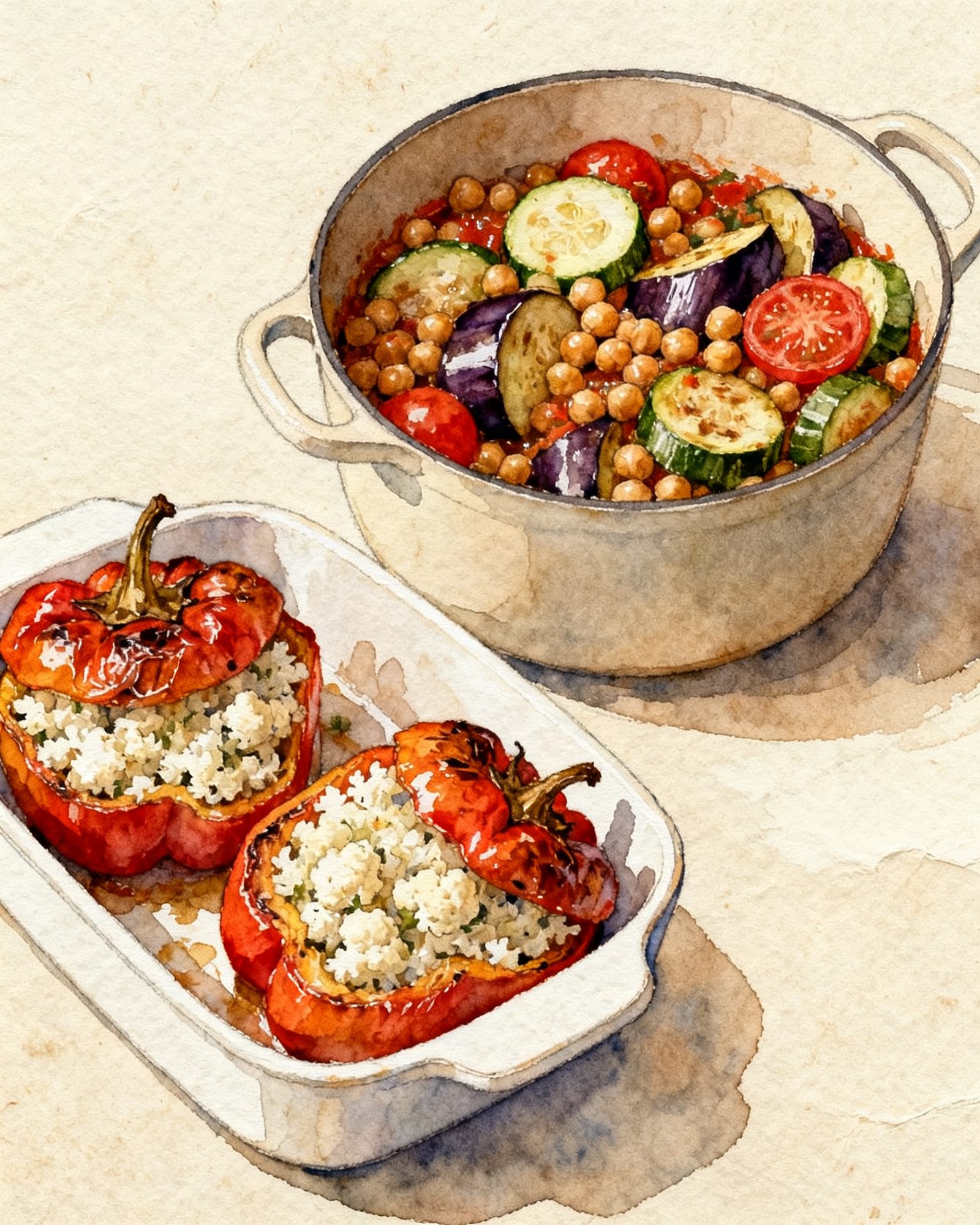
- Another cauliflower dinner: for another plate built on the same vegetable, try stuffed peppers with cauliflower rice, or thread tofu and cauliflower together in tofu and cauliflower skewers with almond sauce.
Common mistakes and how to fix them
- Pale, soft tofu: it was not pressed long enough, or the pan was crowded. Use two baking sheets if the cubes do not fit with space around them.
- Coating that turns gummy: too much cornstarch, or cornstarch added before the oil and soy sauce. Toss with the liquids first, then sprinkle the starch over a little at a time.
- Burnt sauce: it went on too early or stayed in too long. Scrape off the worst of it and toss the tofu with some of the reserved sauce.
- Runny mash: it was not drained well or had too much milk. Return it to the pot and stir over low heat for a few minutes to drive off some moisture.
- Bland mash: cauliflower needs its salt. Taste after blending and add more a pinch at a time.
Storing and reheating
Refrigerate leftovers within 2 hours of cooking, in shallow covered containers, at 40°F or below. USDA’s Food Safety and Inspection Service gives 3 to 4 days in the refrigerator for leftovers. Keep the tofu and the mash in separate containers so the tofu does not soak up moisture from the mash.
Reheat the tofu on a baking sheet in a hot oven or in a skillet over medium heat, so it crisps again; a microwave works but leaves it soft. Warm the mash in a saucepan with a splash of plant milk, stirring until it is steaming. Either way, reheat leftovers to 165°F, measured with a food thermometer, as USDA advises.
Both parts can be frozen. FSIS says frozen leftovers keep for 3 to 4 months, and FoodSafety.gov notes that its freezer guidance is “for quality only”, because food stored continuously at 0°F or below can be kept indefinitely. Expect changes: frozen tofu comes back chewier and spongier, and the mash releases some water as it thaws, so whisk or reblend it after reheating.
Allergy and ingredient notes
This recipe contains soy in three places: the tofu, the soy sauce and the soy milk. Unsweetened oat milk replaces the soy milk without trouble, but there is no soy-free way to make the tofu itself. Most soy sauce is brewed with wheat. Tamari is often made without it, so for a wheat-free version use a tamari labeled gluten-free (and, if you swap in oat milk, one made with certified gluten-free oats); the dish is then made with gluten-free ingredients, but check every label for cross-contact, which the NIDDK notes can happen when foods are grown, processed, stored, prepared or served. The barbecue sauce also contains mustard. There are no nuts, peanuts, sesame or coconut in the recipe as written; if you use vegan butter in the mash, check its label, because many contain coconut oil, soy or nuts.
For another weeknight main from the same section, the one-pot chickpea ratatouille shares this dish’s make-ahead habits and reheats just as well.
Common questions
How do I get baked tofu crispy without frying it?
Press the tofu well, toss the cubes in a little oil and soy sauce, then coat them thinly in cornstarch and bake them in a single layer with space around each cube. The cornstarch dries into a thin crust in a hot oven. Crowding the pan traps steam and gives soft, pale tofu.
Why did my BBQ sauce burn in the oven?
Barbecue sauce is sweet: tomatoes, maple syrup and molasses all contain sugars that brown quickly and then scorch. Bake the tofu without sauce first, then toss it in the sauce for only the last 8 to 10 minutes, and check it at 8 minutes.
Can I use store-bought barbecue sauce?
Yes. Use about half a cup on the tofu and serve more on the side. Read the label first: some bottled barbecue sauces contain honey, and some contain Worcestershire sauce, which is traditionally made with anchovies, so neither is vegan.
Can I make BBQ tofu in an air fryer?
Yes. Press and coat the cubes as on the card, then air-fry them in a single layer at the hottest setting, shaking the basket halfway, until golden and crisp, usually 10 to 15 minutes. Toss them with the sauce in a bowl and return them for 1 to 2 minutes so the glaze turns sticky without burning.
How do I keep cauliflower mash from being watery?
Cook the florets only until tender, drain them thoroughly and let them stand in the colander for about 5 minutes so the steam carries the surface water away. Add plant milk a tablespoon at a time while blending and stop as soon as the mash is creamy.
Can I make BBQ tofu ahead of time?
Yes. The sauce can be simmered a day ahead and kept covered in the refrigerator, and the tofu can be pressed and cut a day ahead too. Cooked leftovers should be refrigerated within 2 hours and eaten within 3 to 4 days, reheated to 165°F, which is the USDA guidance for leftovers.
Sources
Read next
Stuffed peppers with cauliflower rice and black beans
Vegan stuffed peppers with a spiced filling of cauliflower rice, black beans, corn and tomato: par-baked halves, a filling that stays dry, make-ahead tips.
Vegan bean chili: thick, smoky and made with three beans
A thick vegan chili with kidney, black and pinto beans: blooming the spices, what thickens it, canned vs. dried beans done safely, toppings and freezing.
Vegan margherita pizza with melting cashew mozzarella
A home-oven vegan margherita pizza: an easy yeast dough, a thick quick tomato sauce, a cashew mozzarella that melts and browns, and how to avoid a soggy center.
How to make cauliflower rice that is fluffy, not mushy
How to make cauliflower rice with a box grater or food processor, cook it dry in a skillet or roast it, season it, freeze it and avoid mushy, watery rice.
Vegan pistachio ice cream
A coconut-milk pistachio ice cream with real pistachio flavor and no green dye: blending the nuts, a chilled base that churns smooth, plus a no-churn method.