Vegan pistachio ice cream
A coconut-milk pistachio ice cream with real pistachio flavor and no green dye: blending the nuts, a chilled base that churns smooth, plus a no-churn method.
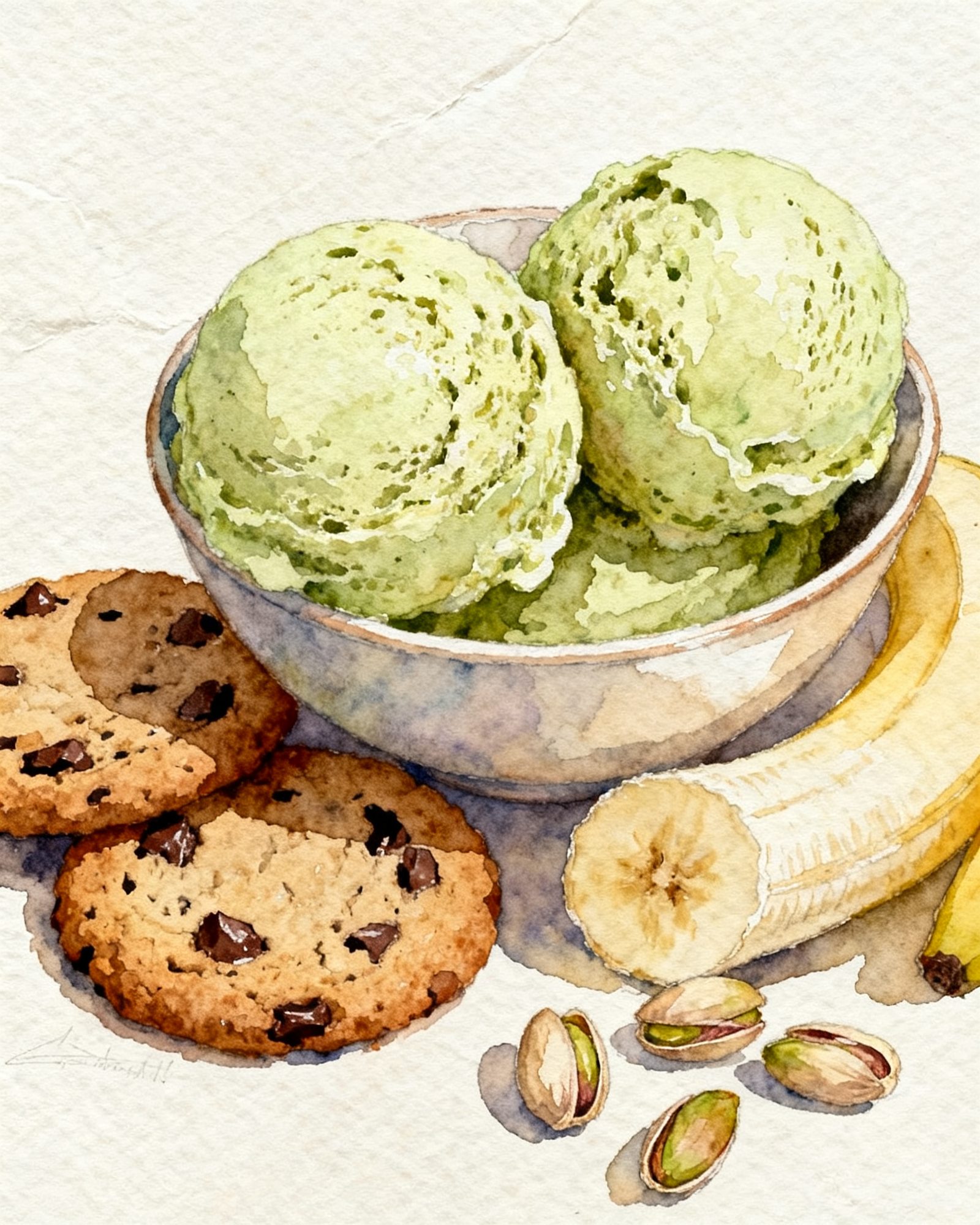
Makes About 5 cups, 8 servings
Ingredients
- 1 cup (125 g) shelled raw unsalted pistachios
- 27 fl oz (about 810 g) full-fat coconut milk, two 13.5 fl oz cans, shaken well
- 2/3 cup (135 g) granulated sugar
- 2 tbsp light corn syrup
- 2 tbsp cornstarch
- 1/4 tsp fine salt
- 1 tsp vanilla extract
- 1/3 cup (41 g) dry-roasted unsalted pistachios, coarsely chopped
Equipment
- High-speed blender
- Medium saucepan
- Whisk
- Small bowl and a medium bowl
- Fine-mesh strainer (optional)
- Ice cream maker, 1 1/2-quart or larger, with its bowl frozen as the maker directs
- Loaf pan (9 by 5 inches) or 2-quart freezer container
- Food processor and ice cube trays (for the no-churn method)
Method
Put the raw pistachios and about 1 cup of the coconut milk in a high-speed blender. Blend on high for 1 to 2 minutes, until completely smooth: rub a drop between your fingers and it should feel creamy, not gritty.
In a small bowl, whisk the cornstarch with 1/4 cup of the remaining coconut milk until no lumps remain.
Pour the pistachio mixture and the rest of the coconut milk into a medium saucepan. Add the sugar, corn syrup and salt. Warm over medium heat, whisking often, until the sugar dissolves and the mixture steams and bubbles at the edges, about 5 minutes.
Whisk the cornstarch mixture again and pour it into the pan while whisking. Keep whisking until the base comes to a gentle boil and thickens enough to coat the back of a spoon, 1 to 2 minutes. Take the pan off the heat and stir in the vanilla.
If you see any specks of pistachio, pour the base through a fine-mesh strainer into a bowl, pressing on the pulp with a spatula to push the liquid through, and discard the pulp left in the strainer. Cover and refrigerate for at least 4 hours, or overnight, until the base is thoroughly cold all the way through.
Whisk the cold base well, since the coconut fat may have firmed on top. Churn it in the ice cream maker as the maker directs, until it looks like thick soft-serve, usually 20 to 30 minutes. Add the chopped roasted pistachios in the last minute of churning.
Scrape the ice cream into a loaf pan or freezer container, press a piece of parchment paper onto the surface, cover and freeze until firm enough to scoop, about 4 hours.
No ice cream maker: pour the cold base into ice cube trays and freeze until solid, at least 4 hours. Process the cubes in a food processor, in batches if needed, scraping down the bowl, until smooth and creamy. Stir in the chopped roasted pistachios, spread in a covered container and freeze until scoopable, about 1 hour.
To serve, let the container stand at room temperature for 10 to 15 minutes, until a scoop slides in easily.
Nutrition per serving
| Calories | 440 |
|---|---|
| Total fat | 33 g |
| Saturated fat | 23 g |
| Carbohydrate | 34 g |
| Fiber | 4 g |
| Total sugars | 26 g |
| Protein | 7 g |
| Sodium | 90 mg |
| Calcium | 40 mg |
| Iron | 2.5 mg |
Per serving, calculated from USDA FoodData Central values for the ingredients and amounts listed. Calories, fat, carbohydrate, fiber, sugars, protein and sodium are rounded with the FDA Nutrition Facts label rules; calcium is shown to the nearest 10 mg and iron to the nearest 0.1 mg. Brands differ, so treat the figures as estimates.
How these numbers were calculated
Each ingredient as weighed for the calculation and the USDA FoodData Central record its nutrients come from. Where USDA has no record for an ingredient (vegan butter, nutritional yeast, coconut sugar), the closest generic record is used and named here.
| Ingredient | Grams | USDA record |
|---|---|---|
| 1 cup (125 g) shelled raw unsalted pistachios | 123 g | FDC 170184: Nuts, pistachio nuts, raw (SR Legacy). Weight from: USDA portion '1 cup' |
| 27 fl oz (about 810 g) full-fat coconut milk, two 13.5 fl oz cans, shaken well | 810 g | FDC 2707568: Coconut milk, used in cooking (FNDDS 2021-2023). Weight from: USDA portion '1 fl oz' |
| 2/3 cup (135 g) granulated sugar | 133.3 g | FDC 169655: Sugars, granulated (SR Legacy). Weight from: USDA portion '1 cup' |
| 2 tbsp light corn syrup | 44 g | FDC 168837: Syrups, corn, light (SR Legacy). Weight from: USDA portion '1 tbsp' |
| 2 tbsp cornstarch | 16 g | FDC 169698: Cornstarch (SR Legacy). Weight from: USDA portion '1 cup' (1 cup = 16 tbsp = 48 tsp) |
| 1/4 tsp fine salt | 1.5 g | FDC 173468: Salt, table (SR Legacy). Weight from: USDA portion '1 tsp' |
| 1 tsp vanilla extract | 4.2 g | FDC 173471: Vanilla extract (SR Legacy). Weight from: USDA portion '1 tsp' |
| 1/3 cup (41 g) dry-roasted unsalted pistachios, coarsely chopped | 41 g | FDC 170185: Nuts, pistachio nuts, dry roasted, without salt added (SR Legacy). Weight from: USDA portion '1 cup' |
This vegan pistachio ice cream starts with a base of full-fat coconut milk that has a whole cup of pistachios blended into it, so the nut flavor runs through every spoonful instead of sitting only in the chopped pieces. A little cornstarch, boiled briefly, gives the base body; sugar and a little corn syrup keep it soft enough to scoop; and a thorough chill before churning gives a smooth, fine texture. It works in an ice cream maker or, with a little more effort, without one.
What replaces the dairy and eggs
Classic pistachio ice cream is a dairy dessert: milk and cream, often thickened with egg yolks into a custard, then flavored with pistachio paste. Each of those jobs has a plant-based stand-in here:
| In dairy ice cream | Job it does | In this recipe |
|---|---|---|
| Cream and whole milk | Fat for creaminess, water to freeze | Full-fat canned coconut milk |
| Egg yolks (custard style) | Body and a smooth, dense texture | Cornstarch, boiled briefly |
| Sugar | Sweetness, softer scooping | Granulated sugar plus a little corn syrup |
| Pistachio paste | Flavor and color | Raw pistachios blended into the base |
Where the pistachio flavor comes from
Most of the flavor is in the blended nuts. Pistachios ground into the coconut milk release their oil and color into the base, the same idea as the pistachio paste used for pistachio gelato. The difference between a faint pistachio ice cream and a strong one is how smooth that blend is: if you can feel grit when you rub a drop between your fingers, keep blending. Any bits that remain give a sandy texture when frozen, which is why the card lets you strain the cooked base.
The chopped roasted pistachios folded in at the end are there for crunch and a toastier note. Using raw pistachios in the base and roasted ones as the mix-in gives both flavors.
A few options if you want more pistachio:
- Pure pistachio paste or pistachio butter (just pistachios, no sugar or oil added) can replace the blended raw nuts. Use about 1/2 cup and whisk it into the coconut milk.
- A drop of almond extract is a common trick in pistachio ice cream; it sharpens the nutty flavor. Keep it to a scant 1/4 teaspoon, since more tastes of marzipan, and leave it out for anyone avoiding almonds.
- Lightly salted roasted pistachios for the mix-in add a salty contrast. Leave out the 1/4 teaspoon of salt in the base if you use them.
Real color, no dye
Homemade pistachio ice cream is pale green-beige, sometimes with an olive tint. The bright, almost mint green of many commercial versions often comes from added food coloring rather than from the nuts. To get the most natural color:
- Choose raw pistachios with green kernels; roasted nuts turn the base tan.
- Rub off the purple-brown skins if you want it greener. Blanching the shelled nuts in boiling water for about a minute and rubbing them in a towel loosens most of the skins.
- Do not cook the base longer than the card says. Long heating dulls the green.
The color will still be soft. That is what pistachio actually looks like.
Why the base is cooked and chilled
Cornstarch gives body. Coconut milk is rich but thin; a small amount of cornstarch thickens it so the frozen ice cream feels dense and smooth. Cornstarch only thickens fully once the liquid comes to a boil, so let the base bubble gently before you take it off the heat.
A cold base churns better. An ice cream maker freezes the base while the paddle beats in a little air and breaks up ice crystals as they form. The faster the base freezes, the smaller the crystals and the smoother the ice cream. A base that goes into the machine lukewarm takes longer to freeze, grows larger crystals and may never firm up past a soupy stage. Chill it in the refrigerator for at least the 4 hours on the card, or overnight; a refrigerator at 40°F or below, the temperature the USDA Food Safety and Inspection Service gives for safe cold storage, gets it there.
Fat and sugar keep it scoopable. Water freezes hard; ice cream stays soft because the sugar dissolved in it lowers its freezing point, so part of the ice cream stays unfrozen even in the freezer. Corn syrup adds body and helps limit large crystals. The fat in full-fat coconut milk gets in the way of large ice crystals and gives a creamy, rich texture. Cutting the sugar or swapping in a low-fat milk gives an ice cream that freezes rock hard and tastes icy.
The no-churn method
Without an ice cream maker, the problem is that a base left to freeze in one block grows large crystals. The method on the card gets around it: freeze the cold base in ice cube trays, then break the cubes down in a food processor. The blade does the job of the churning paddle, smashing the crystals small and beating in some air. Work in batches so the processor is not overloaded, scrape down the bowl, and stop when the mixture is smooth and creamy. A short final freeze firms it up for scooping.
No-churn ice cream made this way is a little denser than churned ice cream. It is best eaten within a day or two, since it tends to harden more in the freezer.
Pint-style ice cream processors
A countertop machine that shaves a frozen pint (instead of churning a cold liquid) also works with this base. Pour the cooked, chilled base into the machine’s pint container, leaving the headroom it asks for, and freeze it for the full time the maker gives, usually around 24 hours, until solid. Process it on the ice cream setting; if it comes out crumbly, add a tablespoon of coconut milk and re-spin, which is the normal fix with these machines. Add the chopped roasted pistachios with the mix-in function at the end. The full recipe makes more than one pint, so freeze the rest in a second container or use the ice-cube-tray method for it.
Substitutions that work, and some that do not
- Lighter plant milks: almond, oat or soy milk alone make an icy ice cream, because they lack the fat of canned coconut milk. If you want to lighten it, replace no more than a cup of the coconut milk. For how the common plant milks differ, see the plant milk comparison.
- Sugar: cane sugar works the same as granulated sugar. Maple syrup can replace the corn syrup, but adds its own flavor.
- Corn syrup: you can replace it with the same amount of extra granulated sugar. The ice cream will be slightly firmer straight from the freezer.
- No coconut: there is no one-to-one swap for the coconut milk, since it supplies nearly all the fat. A different base works instead: thick, unsweetened plant yogurt blended with roasted pistachios, sweetened with maple syrup and frozen in a loaf pan sets like a firm frozen yogurt. It is tangier and icier than this recipe, and it needs about 30 minutes in the refrigerator before it can be scooped.
- Less sugar or sugar-free: sugar does a structural job here, not only a sweet one; it keeps part of the ice cream unfrozen. Cutting it, or replacing it with a zero-calorie sweetener, gives an ice cream that freezes rock hard. If you want it less sweet, cut the sugar by no more than a couple of tablespoons and expect a firmer scoop.
- Other nuts: the same method works with cashews (milder) or almonds (blend longer and strain the base, since almonds stay grittier). For a toasted-nut version with a caramel swirl, see vegan butter pecan ice cream.
Common mistakes
- Gritty texture: the pistachios were not blended smooth. Use a high-speed blender, blend longer, and strain the base.
- Soupy after churning: the base was not cold enough, or the maker’s bowl was not frozen solid. Both need to be thoroughly cold before you start.
- Hard as a brick: the sugar or corn syrup was cut back, or a lighter milk replaced some of the coconut milk. Soften it at room temperature before scooping.
- Separated or greasy: the coconut milk was not whisked smooth before churning. Coconut fat firms in the fridge; whisk the cold base well.
Storing and softening
Keep the ice cream in a covered container with parchment pressed onto the surface, which limits ice crystals and freezer smells. FoodSafety.gov notes that freezer storage guidance is “for quality only”: frozen foods stored continuously at 0°F (-18°C) or below “can be kept indefinitely”, but homemade ice cream slowly turns icy, so it tastes best within a couple of weeks. Let it stand at room temperature for 10 to 15 minutes before scooping. Do not refreeze ice cream that has melted; it turns icy, and the USDA Food Safety and Inspection Service advises discarding perishable food left at room temperature for more than 2 hours (1 hour if the temperature is over 90°F).
For a quick frozen dessert with no cooking or churning, banana nice cream is frozen bananas blended with a little vanilla and salt.
Allergy and ingredient notes
This recipe contains tree nuts (pistachios) and coconut. Coconut milk is the base, so there is no simple swap for anyone who avoids coconut. There is no nut-free version of a pistachio ice cream; for a nut-free frozen dessert, banana nice cream without nut toppings is the simplest choice. The recipe has no soy, wheat or peanuts, but check pistachio packaging for processing alongside peanuts if that matters to you. It is made with gluten-free ingredients; check labels for cross-contact. The almond extract option adds almond flavoring.
A note on the nutrition: the card counts the coconut milk with the USDA record for coconut milk used in cooking, whose values match USDA’s fresh (raw) coconut milk, because USDA’s canned coconut milk record has no fiber or sugar values. Canned full-fat coconut milks also differ in fat from brand to brand, so read the calories and fat on the card as approximate.
Common questions
Is pistachio ice cream vegan?
Regular pistachio ice cream is not: it is made with milk and cream, and custard-style versions also contain egg yolks. Some store-bought pistachio ice creams and gelatos are dairy-free, usually based on coconut, oat or nut milk, so read the label. This recipe uses coconut milk and cornstarch in place of the dairy and eggs.
Why is my homemade pistachio ice cream not green?
Pistachios make a pale, olive-tinged ice cream, not a bright green one. The vivid green of many commercial pistachio ice creams often comes from added color. Raw pistachios with green kernels give the most color, and roasting or leaving the papery skins on makes it browner.
Can I make vegan pistachio ice cream without an ice cream maker?
Yes. Freeze the chilled base in ice cube trays, then process the cubes in a food processor until smooth and refreeze briefly, as described in the last steps of the recipe. The result is a little denser than churned ice cream but still creamy.
Does coconut milk ice cream taste like coconut?
A little. Pistachio and vanilla lead, but full-fat coconut milk leaves a mild coconut note in the background. Blending the pistachios into the base, rather than only stirring in chopped nuts, keeps the pistachio flavor strong enough to stand in front of it.
Can I use almond or oat milk instead of coconut milk?
Not as a straight swap. Those milks have far less fat than canned coconut milk, so the ice cream freezes harder and icier. Full-fat coconut milk is what makes this base creamy without dairy.
How do I keep homemade ice cream from freezing rock hard?
Keep the sugar and corn syrup in the recipe, since they keep part of the ice cream unfrozen and scoopable. Store it with parchment pressed onto the surface, and let the container stand at room temperature for 10 to 15 minutes before scooping.
Sources
Read next
Vegan butter pecan ice cream with caramel
Dairy-free butter pecan ice cream: pecans toasted in vegan butter, a brown sugar coconut-milk base and a cold coconut caramel swirl. Churned or no-churn.
Banana nice cream, plus a blue spirulina version
How to turn frozen bananas into smooth soft-serve: ripeness, slicing and freezing, blending with almost no liquid, a blue spirulina version and more flavors.
Vegan chocolate chip cookies: chewy, golden, no eggs
Chewy vegan chocolate chip cookies made with vegan butter and no eggs: why brown sugar and chilling matter, when to pull them, ice cream sandwiches, freezing.
Vegan buckwheat pancakes, light and fluffy
Fluffy vegan buckwheat pancakes with no eggs or dairy: how the batter rises, why it rests 10 minutes, when to flip, a banana option, and freezing tips.
Chia pudding: the ratio, the method and five flavors
How to make chia pudding that sets thick and smooth: the 1-to-4 ratio of seeds to plant milk, the second stir that stops clumps, flavors and storage.