Vegan chocolate chip cookies: chewy, golden, no eggs
Chewy vegan chocolate chip cookies made with vegan butter and no eggs: why brown sugar and chilling matter, when to pull them, ice cream sandwiches, freezing.
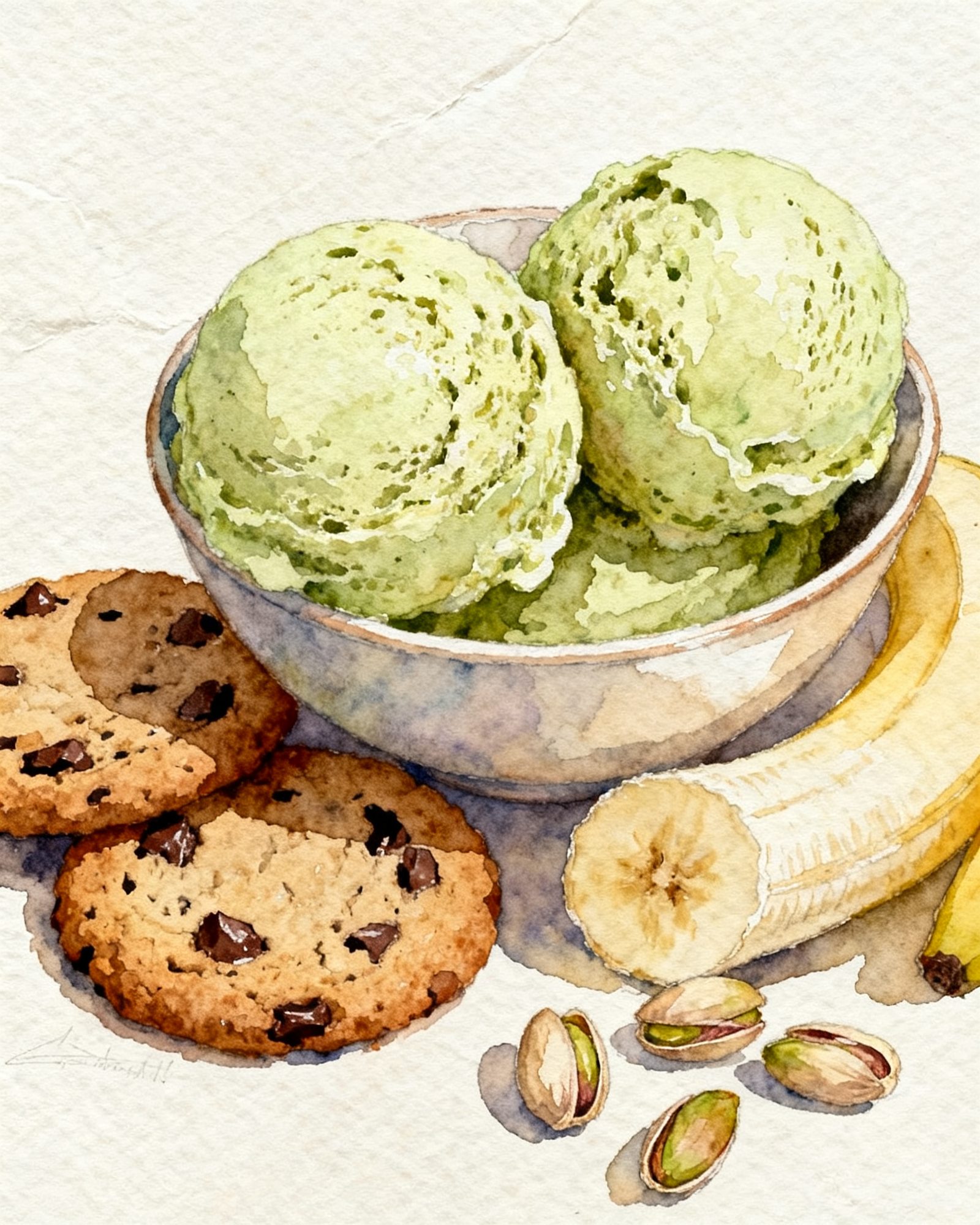
Makes About 28 cookies, 1 cookie per serving
Ingredients
- 2 1/4 cups (280 g) all-purpose flour, spooned into the cup and leveled
- 1 tsp baking soda
- 1/2 tsp fine salt, 3/4 tsp if your vegan butter is unsalted
- 1 cup (225 g) vegan butter (a plant-based stick), softened until it dents when pressed but is not greasy (USDA has no vegan butter record; the nutrition uses its stick margarine record, and brands differ, especially in saturated fat)
- 3/4 cup (165 g) light brown sugar, packed
- 1/2 cup (100 g) granulated sugar
- 1/4 cup (60 ml) unsweetened soy milk, or another plant milk, at room temperature
- 2 tsp vanilla extract
- 1 1/2 cups (250 g) dairy-free semisweet chocolate chips
Equipment
- Stand mixer or hand mixer
- Large and medium mixing bowls
- Two rimmed baking sheets
- Parchment paper
- 2-tablespoon cookie scoop or measuring spoon
- Wire rack
Method
In a medium bowl, whisk the flour, baking soda and salt until evenly mixed.
In a large bowl, beat the softened vegan butter, brown sugar and granulated sugar with a mixer on medium speed for 2 to 3 minutes, until lighter in color and fluffy. Scrape down the bowl.
Add the soy milk and vanilla and beat on low until smooth. The mixture may look slightly curdled at first; it comes together within about 30 seconds.
Add the flour mixture and mix on low speed just until no dry flour remains. Stir in the chocolate chips with a spatula. The dough should be soft but hold a shape when scooped.
Cover the bowl and refrigerate the dough for at least 1 hour, or up to 3 days, until firm.
Heat the oven to 350°F (175°C) with a rack in the center. Line two baking sheets with parchment paper.
Scoop the cold dough into rounded 2-tablespoon portions (about 40 g each) and set them 2 inches apart, 12 to a sheet. Keep the rest of the dough in the refrigerator between batches.
Bake one sheet at a time for 10 to 12 minutes, until the edges are set and golden and the centers look puffed and slightly underbaked. They firm up as they cool.
Let the cookies cool on the baking sheet for 5 minutes, then move them to a wire rack to cool. Bake the remaining dough on a cool baking sheet the same way.
Nutrition per serving
| Calories | 170 |
|---|---|
| Total fat | 9 g |
| Saturated fat | 3 g |
| Carbohydrate | 23 g |
| Fiber | less than 1 g |
| Total sugars | 14 g |
| Protein | 1 g |
| Sodium | 150 mg |
| Calcium | 10 mg |
| Iron | 0.8 mg |
Per serving, calculated from USDA FoodData Central values for the ingredients and amounts listed. Calories, fat, carbohydrate, fiber, sugars, protein and sodium are rounded with the FDA Nutrition Facts label rules; calcium is shown to the nearest 10 mg and iron to the nearest 0.1 mg. Brands differ, so treat the figures as estimates.
How these numbers were calculated
Each ingredient as weighed for the calculation and the USDA FoodData Central record its nutrients come from. Where USDA has no record for an ingredient (vegan butter, nutritional yeast, coconut sugar), the closest generic record is used and named here.
| Ingredient | Grams | USDA record |
|---|---|---|
| 2 1/4 cups (280 g) all-purpose flour, spooned into the cup and leveled | 281.2 g | FDC 168894: Wheat flour, white, all-purpose, enriched, bleached (SR Legacy). Weight from: USDA portion '1 cup' |
| 1 tsp baking soda | 4.6 g | FDC 175040: Leavening agents, baking soda (SR Legacy). Weight from: USDA portion '1 tsp' |
| 1/2 tsp fine salt, 3/4 tsp if your vegan butter is unsalted | 3 g | FDC 173468: Salt, table (SR Legacy). Weight from: USDA portion '1 tsp' |
| 1 cup (225 g) vegan butter (a plant-based stick), softened until it dents when pressed but is not greasy (USDA has no vegan butter record; the nutrition uses its stick margarine record, and brands differ, especially in saturated fat) | 224 g | FDC 2710159: Margarine, stick (FNDDS 2021-2023). Weight from: USDA portion '1 cup' |
| 3/4 cup (165 g) light brown sugar, packed | 165 g | FDC 168833: Sugars, brown (SR Legacy). Weight from: USDA portion '1 cup packed' |
| 1/2 cup (100 g) granulated sugar | 100 g | FDC 169655: Sugars, granulated (SR Legacy). Weight from: USDA portion '1 cup' |
| 1/4 cup (60 ml) unsweetened soy milk, or another plant milk, at room temperature | 60.8 g | FDC 175215: Soymilk (all flavors), unsweetened, with added calcium, vitamins A and D (SR Legacy). Weight from: USDA portion '1 cup' |
| 2 tsp vanilla extract | 8.4 g | FDC 173471: Vanilla extract (SR Legacy). Weight from: USDA portion '1 tsp' |
| 1 1/2 cups (250 g) dairy-free semisweet chocolate chips | 252 g | FDC 167976: Candies, semisweet chocolate (SR Legacy). Weight from: USDA portion '1 cup chips (6 oz package)' |
These are classic American chocolate chip cookies with golden, slightly crisp edges and soft, chewy middles, made without butter or eggs. The dough is built the traditional way, by creaming fat with sugar, but three choices make the vegan version behave: a firm plant-based butter stick instead of a tub spread, more brown sugar than white, and an hour in the refrigerator before baking. The recipe card above gives the amounts; the sections below explain what each step is doing, so you can adjust with confidence.
What replaces the butter and the eggs
The fat. Vegan butter sticks are blends of plant oils made to work like butter: mostly fat, with some water, and solid at room temperature. That combination is what lets them cream with sugar and trap air. Tub spreads and “light” spreads contain more water and less fat, and they give flat, cakey cookies, so use the stick kind. Many vegan butters are salted, which is why the card uses only 1/2 teaspoon of salt; add the extra 1/4 teaspoon if yours is unsalted.
The eggs. In a regular chocolate chip cookie the eggs add liquid, some structure and a little lift. In a dense, chewy cookie the liquid matters most, and 1/4 cup of plant milk supplies it. The flour provides the structure, and the baking soda gives the lift. If you prefer an egg replacer, a flax egg (1 tablespoon of ground flaxseed stirred into 3 tablespoons of water and left to thicken) can stand in for the milk and makes a slightly chewier, nuttier cookie with visible flecks. The guide to egg substitutes explains which replacers suit which bakes.
Why brown sugar makes them chewy
Brown sugar is white sugar with molasses, and molasses holds on to moisture. More brown sugar than white keeps the centers soft and bendy for days instead of drying to a snap. Molasses is also slightly acidic, and that acid reacts with the baking soda as the cookies heat, giving them a gentle rise and a deeper color. White sugar does the opposite job: it melts and spreads, and it gives the crisp, caramelized rim. The 3/4 cup brown to 1/2 cup white on the card is the balance between a chewy center and a crisp edge. Shift it toward all brown sugar for softer, thicker cookies, or toward more white sugar for thinner, crisper ones.
Creaming the vegan butter with both sugars for 2 to 3 minutes matters too. The sugar crystals cut tiny air pockets into the fat, and those pockets expand in the oven. Stop when the mixture is lighter in color and fluffy. Vegan butter warms quickly under the beaters, and if it starts to look glossy and greasy, refrigerate the bowl for 10 minutes before adding the flour.
Chilling the dough is not optional here
Many vegan butters soften faster than dairy butter, so a warm ball of dough spreads across the baking sheet before the edges have time to set. An hour in the refrigerator does two things: it firms the fat, so the cookies hold their shape long enough to set, and it gives the flour time to absorb the liquid, which improves both the chew and the browning. The dough keeps, covered, for up to 3 days, and longer chilling deepens the brown-sugar flavor a little. Very cold dough may need a few minutes on the counter before it will scoop.
Keep the dough you are not baking in the refrigerator between batches, and always put it on a cool sheet. A baking sheet that is still hot from the oven starts melting the fat before the cookies are in.
When to take them out of the oven
Pull the cookies at 10 to 12 minutes at 350°F (175°C), when the edges are set and golden and the centers still look puffed, pale and a little underbaked. They keep cooking on the hot sheet for the 5 minutes they rest there, and the centers settle into a chewy middle as they cool. If you wait until the centers look done in the oven, the cookies will be crisp all the way through once cool. Ovens vary, so check the first batch at 10 minutes and adjust the rest.
For cookies of the same size and bake, portion them with a 2-tablespoon scoop or weigh them at about 40 g each. Bake one sheet at a time on the center rack, which gives the most even color.
Substitutions that work, and two that do not
- Chocolate: chopped dairy-free dark chocolate makes puddles and streaks instead of neat chips. Many semisweet chips contain no dairy, but check the ingredient list, because some contain milk fat or milk solids.
- Gluten-free: a gluten-free all-purpose baking blend made to replace wheat flour one to one and containing xanthan gum gives a good cookie with a slightly sandier crumb; let the dough rest the full hour so the flour hydrates. The cookies are then made with gluten-free ingredients; check labels for cross-contact, which the NIDDK notes can happen when foods are grown, processed, stored, prepared or served.
- Coconut sugar for the brown sugar: works measure for measure, with a darker color and a slightly drier, less chewy cookie. For how coconut sugar, maple syrup and other sweeteners differ, see natural sweeteners compared.
- Does not work: liquid sweeteners. Maple syrup or agave in place of the sugar adds liquid and removes the crystals that creaming needs, so the cookies turn out cakey and spread unevenly.
- Does not work: oil in place of the vegan butter. Liquid oil cannot be creamed, and the cookies bake up dense and greasy.
Chewy, crisp or thick: steering the texture
The card makes cookies with crisp edges and chewy centers. Small changes move them in either direction:
| You want | Change | Why it works |
|---|---|---|
| Thicker, softer, gooier centers | Use 1 1/4 cups packed brown sugar and no white sugar, add 2 teaspoons of cornstarch to the flour, chill the dough overnight, and pull the cookies at the low end of 10 to 12 minutes | More molasses holds moisture, cornstarch softens the crumb, and very cold dough spreads less |
| Thinner, crisper cookies | Use 1/2 cup brown and 3/4 cup granulated sugar, press each ball down slightly, and bake a minute or two past the card’s time, until golden across the top | White sugar melts and spreads, and the extra time dries the centers |
| Wider, rippled cookies | Halfway through baking, lift the sheet an inch and drop it on the rack, then again at the end | The puffed centers collapse and spread outward in rings |
| Bakery look | Press a few extra chips onto each warm cookie and sprinkle with flaky salt | The chips melt in place on top; salt sharpens the chocolate |
Whatever you change, keep the oven at 350°F (175°C) and judge by the edges: set and golden means done.
Egg replacers and other swaps compared
The card needs no egg replacer, because plant milk supplies the liquid an egg would. These are the swaps people ask about most, and what each one really does:
| Swap | How much | Result |
|---|---|---|
| Flax egg instead of the soy milk | 1 tablespoon ground flaxseed + 3 tablespoons water, thickened | Slightly chewier and nuttier, with visible flecks |
| Aquafaba (chickpea can liquid) instead of the soy milk | 1/4 cup | Very close to the card; a little more lift and crisper edges |
| Unsweetened applesauce instead of the soy milk | 1/4 cup | Softer, cakier and puffier; a faint apple taste |
| Coconut oil instead of vegan butter | About 3/4 cup plus 1 tablespoon, solid but soft | Crisper edges; unrefined oil tastes of coconut |
| Half whole wheat flour | Replace half the flour with whole wheat flour | Nuttier, a little denser and darker; rest the dough the full hour |
| Almond flour | Replace no more than 1/2 cup of the all-purpose flour | Richer and more tender; almond flour has no gluten, so a full swap gives flat, crumbly cookies |
| Double chocolate | Replace 1/4 cup of the flour with unsweetened cocoa powder | Dark, brownie-like cookies; the dough is stiffer, so scoop it before it is fully cold |
| Browned vegan butter | Not recommended | Most vegan butter sticks contain no milk solids, the part that turns nutty in brown butter, so browning them mainly cooks off water and dries the dough |
A half batch for a smaller tray
For about 14 cookies, halve everything: 1 cup plus 2 tablespoons all-purpose flour, 1/2 teaspoon baking soda, 1/4 teaspoon fine salt, 1/2 cup vegan butter, 6 tablespoons packed light brown sugar, 1/4 cup granulated sugar, 2 tablespoons plant milk, 1 teaspoon vanilla and 3/4 cup chocolate chips. If you bake by weight, use exactly half of each gram amount on the card. The method, chilling, oven temperature and bake time stay the same. For a bake of only two or three cookies, make the full dough and freeze the rest in scooped portions, as described below.
An air fryer can bake a few cookies at a time on a round of parchment, but its fan browns the tops quickly: set it lower than the oven temperature on the card, flatten the dough balls slightly, and check well before the oven time.
Ice cream sandwiches from the same dough
Chewy cookies make good ice cream sandwiches because they bend instead of cracking when you bite. Bake the cookies as written, cool them completely, then press a scoop of softened dairy-free ice cream between two flat sides. Banana nice cream works well if you freeze it until scoopable first. Roll the edges in mini chocolate chips, wrap each sandwich and freeze until firm, then let them stand a few minutes before eating so the cookies soften.
Storing the cookies and freezing the dough
Once completely cool, keep the cookies in an airtight container at room temperature; a slice of bread in the container helps keep them soft. Baked cookies also freeze well in a sealed bag and thaw on the counter in well under an hour.
Raw dough freezes even better. Scoop it into portions, freeze them on a lined tray until hard, then move them to a freezer bag. Bake from frozen at the same temperature, adding a minute or two, until the edges are golden. The FoodSafety.gov storage chart describes freezer times as being for quality only, since frozen food stored continuously at 0°F or below can be kept indefinitely; for the best flavor, bake frozen dough within a few months.
However tempting the bowl, do not taste the dough before it is baked. The FDA points out that “Flour is a raw food” and says: “Never eat or taste raw flour, dough, or batter.” Egg-free dough is no exception, because the concern is the flour itself.
Allergy and ingredient notes
This recipe contains wheat (all-purpose flour, which contains gluten) and soy (soy milk; many vegan butters also contain soy oil or soy lecithin). Some vegan butters contain coconut oil, and some chocolate chips are made on equipment shared with milk, tree nuts or peanuts, so read the labels if anyone you bake for has an allergy. For a soy-free batch, use oat milk, a soy-free vegan butter and chocolate chips without soy lecithin, a common emulsifier in chips. The recipe contains no nuts. If you like a chewier cookie with toasted coconut, the oatmeal coconut cookies use the same method, and the cinnamon-sugar vegan snickerdoodles are a good second batch.
Common questions
Why did my vegan cookies spread flat?
The usual causes are butter that was too soft or partly melted, dough that went into the oven warm, or a hot baking sheet straight from the previous batch. Chill the dough until firm, scoop it cold and always start on a cool sheet. Too little flour also makes cookies spread: the card's 2 1/4 cups is about 280 g spooned in and leveled, and weighing it is the surest way to get that amount.
Do I really have to chill vegan cookie dough?
For this recipe, yes. Many vegan butters are softer than dairy butter at room temperature, so unchilled dough spreads into thin, greasy cookies. An hour in the refrigerator firms the fat and lets the flour absorb some of the liquid, which gives thicker, chewier cookies with more even browning.
Are chocolate chips vegan?
Many semisweet and dark chocolate chips are made from sugar, chocolate, cocoa butter and an emulsifier with no dairy, but some contain milk fat or milk solids. Read the ingredient list, not only the front of the bag, and look at the allergen statement if a 'may contain milk' warning matters to you.
Can I use coconut oil instead of vegan butter?
Yes, with a different result. Use solid, softened coconut oil and slightly less of it, about 3/4 cup plus 1 tablespoon, because it is pure fat while vegan butter also contains water. The cookies come out crisper at the edges, and unrefined coconut oil adds a coconut taste; refined coconut oil is neutral.
Can I freeze the dough?
Yes. Scoop it into balls, freeze them on a lined tray until hard, then pack them in a freezer bag. Bake straight from frozen at the same temperature, adding a minute or two, until the edges are golden. FoodSafety.gov notes that freezer storage times are for quality only.
Sources
Read next
Vegan pistachio ice cream
A coconut-milk pistachio ice cream with real pistachio flavor and no green dye: blending the nuts, a chilled base that churns smooth, plus a no-churn method.
Vegan butter pecan ice cream with caramel
Dairy-free butter pecan ice cream: pecans toasted in vegan butter, a brown sugar coconut-milk base and a cold coconut caramel swirl. Churned or no-churn.
Banana nice cream, plus a blue spirulina version
How to turn frozen bananas into smooth soft-serve: ripeness, slicing and freezing, blending with almost no liquid, a blue spirulina version and more flavors.
Vegan buckwheat pancakes, light and fluffy
Fluffy vegan buckwheat pancakes with no eggs or dairy: how the batter rises, why it rests 10 minutes, when to flip, a banana option, and freezing tips.
Maple almond granola with big clusters
Homemade maple almond granola with big crunchy clusters: press it flat, bake at 325°F without stirring, cool it untouched. Plus a chocolate version.